The thought of using a piezo element came naturally as it’s a sensor that can detect vibrations. This comes very in handy as scare can be a loud sound, a slam on the table, some object randomly falling down on the table an making a noise. The piezo works most accurately by being taped to the surface that is being used for vibrations, in this case the table.
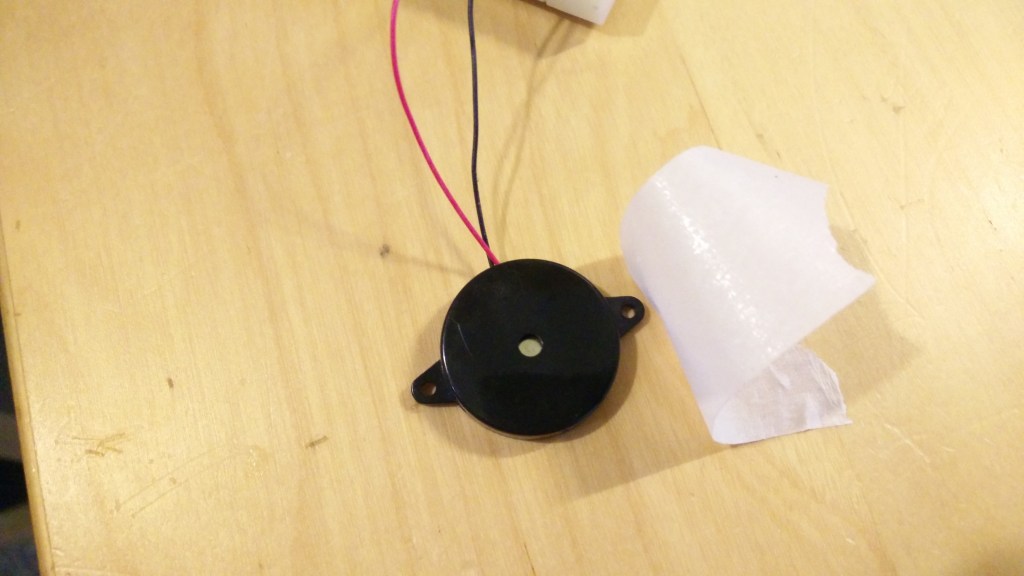
Unlike the photoresistor we (the user) can measure the “scare”. So a more dynamic interaction can be crafted. As we can hear the sound produced we can certainly assess or at least get a feeling of how intense the scare is for us but also for the LED. The more higher value the piezo can sense (the louder we slam the table) the more frightened and longer recovery the LED will need.
Below are some videos of different scares. The sensor definitely displays a more dynamic behaviour than the photoresistor for both parties in the interaction. The LDR had an issue and that was that the user didn’t know how much limitation of the light was needed in order to make the LED frightened.
In the video demonstration the piezo is set go of at different triggers. Meaning a light knock will run a code where the LED is not that much scared while a loud knock will yield the maximum amount expression of being scared. The recovery period should also follow in proportion to how much scared the LED got. The behaviour of the LED is designed as close as I can think of human behaviour. A big scare moment for us would take more time to recover from than a smaller scare would.
The comparison between simple sensors got me thinking about how unique every interactive setting is and that a lot more can be felt if the right coupling is made between the input and output. A natural comparison to the real life also transmits a more genuine feeling into something that is not real or organic. Emotions and feelings have this multi-dimension of realism that is hard to infuse and make objects mimic. Maybe it is the fact that we know the physical boundaries of the object, in this case, the LED. I’m going off from my theme a bit here but what if the user scares the LED too much/intense that the LED would break or in other word, die? It certainly would change the users behaviour towards the LED if there was a possibility of it “dying”.

 Micro blogg